Monday, September 6, 2010

Forsythe/Brigantine NWR: Yellow-headed Blackbirds and grassland shorebirds


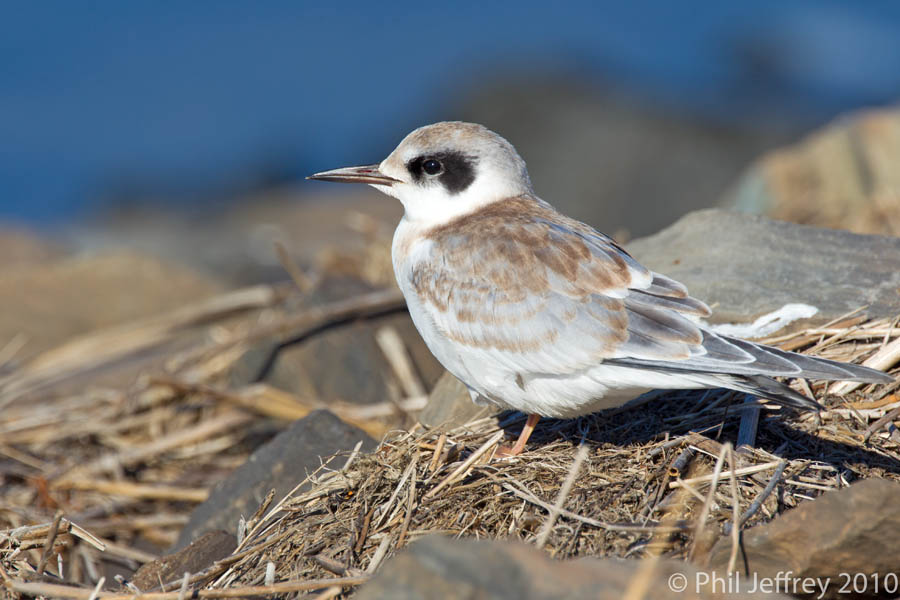
The problem with being social is that it eats into the early morning birding starts. In this case I got a tardy start at Brigantine NWR - a shameful 8:30am. I did two loops around the auto loop, and on the first loop mostly ignored shorebirds in the NW pool as I headed to the NE "pool" which is mainly a grass flat now. En route I noticed that most of the Forster's Terns were in or near basic plumage now. It was high tide, and apparently there were a lot of schooling fish since there were multiple cormorant-tern-heron feeding frenzies at locations in the southern pool. There were a lot of Snowy/Great Egrets, Forster's Terns and Double-crested Cormorants at these frenzies.

There were also a lot of swallows. Thousands. At one point I looked across the impoundements and got a sense of the magnitude since as far as I looked the air teemed with Tree, Barn and Bank Swallows - there were a reasonable number of the latter too.

Outside the impoundments I found a group of at least 10 Saltmarsh Sharp-tailed Sparrows perched up and apparently waiting out the high tide - this being comfortably my all time high count. A mix of adults and immatures and accompanied by a vocal Clapper Rail perched up in the saltmarsh.

Finally I made it around to the dog leg, dodging caterpillars crossing the tour road as I went, and scanned the grass flats. Heat haze was cutting into visibility already, but I found two American Golden-Plovers and a Buff-breasted Sandpiper on the first pass, and then just as I settled on a Baird's the group took flight. I found a more cooperative Baird's Sandpiper a little later, as well as a total of 4 Buff-breasted's. The surprise was finding two Yellow-headed Blackbirds sitting on the edge of the grass flats as I searched for Baird's and Buff-breasted's. They sat there for a while letting me assess bill and tail length to make sure it wasn't some aberrant Boat-tailed Grackle plumage (too yellow in any event). First time I'd seen these in NJ.

On the second tour around the auto loop I added a few shorebirds: White-rumped Sandpiper, Whimbrel, Short-billed Dowitcher and Lesser Yellowlegs to the list, but it was getting hotter and I didn't linger. Notable absence was Willet - presumably all the Eastern ssp birds have left and the Western ssp ones have yet to take their place.

American Black Duck
Double-crested Cormorant
Great Blue Heron
Great Egret
Snowy Egret
Osprey
Bald Eagle
Whimbrel
Black-bellied Plover
American Golden-Plover
Semipalmated Plover
Greater Yellowlegs
Lesser Yellowlegs
Semipalmated Sandpiper
Least Sandpiper
White-rumped Sandpiper
Baird's Sandpiper
Buff-breasted Sandpiper
Short-billed Dowitcher
Caspian Tern
Forster's Tern
Black Skimmer
Tree Swallow
Bank Swallow
Barn Swallow
Yellow Warbler
Common Yellowthroat
Saltmarsh Sharp-tailed Sparrow
Yellow-headed Blackbird

Tuesday, August 31, 2010

The limitations of Structure


(Written with some irony as I'm a Structural Biologist so quite a firm believer of the importance of structure at the atomic level).

The publishing of the O'Brien-Crossley-Karlson Shorebird Guide brought with it some fanfare of improved methods of ID by "birding by impression". I'm perhaps not as impressed as I could be by that idea, because I don't think it's novel - anyone that's spent any time birding is using structure (shape and posture, but also intangibles of behavior) anyway.

Since I belong to the often thought-provoking BIRDWG01 "Frontiers of Bird Identification" email list it's often very interesting to think about the discussions on there. In particular it's apparent that the structural appearance of a bird is often very heavily influenced by the posture that the photograph captures. It may be "typical" or "atypical" viewed through birders' eyes. I've developed an internal idea about how birders select ID point, which in terms of structure involves discarding a whole range of ambiguous views (or perhaps integrating them mentally) until a distinctive view is found from which one can make the ID. A photograph presents only one or a small number of views, and mayhem seems to sometimes break out by experienced birders trying to hammer the square peg into the round hole: an anomalous view of a typical species.

Although color perception may be skewed by lighting in photographs (or to a lesser extent by post-processing), I find that structure is especially vulnerable to this. I've seen shorebird structure vary all over the place in a series of photographs. To whit: two recent BIRDWG01 discussions on a bright alternate White-rumped Sandpiper from Canada and a first fall immature Sanderling from Bolivia in prebasic molt. In both cases one of the strongest proponents of structure as a primary ID point identified the former as Western Sandpiper and the latter as White-rumped. Whoops. Particularly in the latter case where I was induced to go dig out my own photos of the White-rumped & Sanderling group to check my overall impression (color and bill structure) against the photographs. And it looked even more like a Sanderling after that exercise than it did on my first impression. Plumage coloration and pattern were definitively Sanderling from my perspective.

Which leads me to suggest: structure is overrated, particularly when identifying from photographs. Often very important, sometimes definitive, but also perhaps overrated and certainly not revolutionary. Birding has been going on for too long, practiced by too many people, for anyone to come along with revolutionary ID points across entire classes of birds. While genetics may radically revise how we view species distribution and what it means to be a species, I somehow doubt that morphological considerations are going to overwhelm those of plumage color and pattern any time soon.

Sunday, August 29, 2010

Princeton, August 27th and 29th

I did a little walk without optics along the gravel road at the Institute Woods on Friday after work. Migrants were pretty much absent - the Eastern Wood-Pewee that was calling may have been a resident bird. However on my way back to the car there was a good find - two Pileated Woodpeckers feeding fairly close to the road. Once you track down the wood chopping sound there's not much you can mistake a Pileated for.

On the morning of the 29th I returned with optics to check out migration but it was still deathly quiet. I found a Scarlet Tanager along the road, Pewees were calling and that was it again. At the pond Red-winged Blackbirds were numerous, probably roosting there, and two slimmer tan icterids took off heading away from me - probably Bobolinks. Best bird was a Ruby-throated Hummingbird that shot past me as I was standing on the observation platform (literally a few feet to my left) and kept heading south-west. The loud drumming from deeper in the forest sounded big enough that it was the Pileateds again, but I didn't see them this time.

Saturday, August 28, 2010

Brigantine NWR, August 28th

Making a little of a lethargic start I opted to go check out shorebirds at Brigantine NWR, with high tide expected around the middle of the day. There was a large flock of Tree Swallows at the Gull Pond tower turn-around but the tower was under construction.

Recent rain seem to be reflected in the pools being relatively high on water, although the north-western pool looked like it had been drained down to provide more shorebird habitat. I came away with not too much diversity, at least in part because I went around prior to high tide and because the driest pool put the shorebirds deep into the heat haze. Best shorebirds were a couple of Pectoral Sandpipers, missing the Buff-breasted and Avocets seen later in the morning. Spotted Sandpiper, both Yellowlegs, Willet, Semipalmated Sandpiper (abundant), Least Sandpiper, Black-bellied Plover and Ruddy Turnstone rounded out the total. Ospreys and two Peregrines were the raptors seen. At the "tern sluice" there were no Common Terns but a nice extra were two juvenile Least Terns and a molting adult - a species I see infrequently there. Other terns included abundant Forster's, a few Caspians, and Black Skimmer. Two Blue Grosbeaks at the dogleg and a fast moving Ruby-throated Hummingbird were two other notables.

Friday, August 20, 2010

Jamaica Bay, August 20th

This was a high tide mud-crawling exercise late in the day on a Friday, and as I walked out onto the north end of the East Pond a young Peregrine had scared all the shorebirds into the air - a large chunk of them settled down in front of me so I didn't move more than 50 yards in the next three hours. The diversity was modest because of that.

Best birds were good numbers of White-rumped Sandpipers - all adults, followed by a flock of 9 Stilt Sandpipers - also all adults. Juvenile Semipalmated Sandpipers were relatively uncommon although the adults were by far the most numerous species present.

Double-crested Cormorant
Great Egret
Snowy Egret
American Black Duck
Green-winged Teal
Peregrine Falcon
Black-bellied Plover
Semipalmated Plover
Greater Yellowlegs
Lesser Yellowlegs
Semipalmated Sandpiper
Least Sandpiper
White-rumped Sandpiper
Stilt Sandpiper
Short-billed Dowitcher
Forster's Tern
Barn Swallow
Northern Waterthrush

Saturday, August 7, 2010

Jamaica Bay, August 7th

My first foray into NYC for fall migration corresponded to a morning high tide at Jamaica Bay WR where I was interested mainly in shorebird photography and not pushing my luck with elevated temperatures.

The East Pond had moderate levels of exposed mud which were still quite wet and not all that green yet at the south end. Apparently at the north end it's still quite muddy, but the forecast looks generally dry so the odds are that it will draw down yet further.

Shorebird diversity was modest, but then again I didn't go even as far as the Raunt. Semipalmated Sandpiper (adults only) was the most numerous, Semipalmated Plover (adults), Least Sandpiper (adults+juveniles), Lesser Yellowlegs (juveniles) and Short-billed Dowitcher (adults+juveniles) were around. There was a good tern showing: Forster's, Common, Least and juvenile Black. There was also a good selection of herons: Great Blue Heron; Great Egret; Snowy Egret; Tricolored Heron; Green Heron; Yellow-crowned and Black-crowned Night Herons (Yellow-crowned being particularly numerous). Boat-tailed Grackles were in predictably heavy molt. The best bird was a distant look at the American White Pelican which has lingered here and remarkably not my first one at Jamaica Bay. Over on the West Pond nothing much was happening although I did add Spotted Sandpiper, American Oystercatcher and Greater Yellowlegs. Diversity should increase as the month draws on, although more widely-ranging birders had more luck than me with the less common shorebird species.

Wednesday, August 4, 2010

Swallows and Swifts

A nice find on returning home last night was a group of Chimney Swifts and swallows feeding over a (presumed) insect swarm across the road and doing passes over my property. A couple of large dragonflies were also hunting. At first I assumed it was just two or more Barn Swallows, but after fetching binoculars I saw two Northern Rough-winged Swallows perched on one of my Silver Maples. Northern Rough-winged is a new yard bird.

Saturday, July 31, 2010

Six Mile Run, July 31st


To finish off a month after a couple of weeks idle due to surgery I visited Six Mile Run to see how the postbreeding situation was. I found that they'd mowed a portion of the main field to the north of the grassland path - this might be for habitat regeneration. Best bird was a juvenile Blue Grosbeak, flocking with Field Sparrows (juveniles here too) and a couple of very worn adult Song Sparrows. A few male Indigo Buntings were hanging around, and two were singing. I thought I heard a brief snippet of Grasshopper Sparrow song but didn't see any so I might have been mistaken. The habitat was still in flower, particularly with some thistle species, and Eastern Tiger Swallowtail butterflies were relatively numerous. Orchard Oriole, Cedar Waxwing, Eastern Bluebird, House Wren and American Goldfinch were also around.

Contrast this with Griggstown which had no flowering plants within hundreds of yards of the parking lot, no butterflies, and virtually no birds. Franklin Township have really f*cked up the habitat maintenance at Griggstown and actually managed to degrade it substantially.

Sunday, July 4, 2010

Fall migration begins (July 3rd)

Two successive weekend visits to Brigantine NWR turned up mostly the same species both times with minor variations and one embellishment: two small flocks of shorebirds on July 3rd. Forster's Terns were numerous, as were greenheads. On 6/28 two Common Terns were seen at the south-eastern sluice where I often observe them, with one Common Tern particularly cooperative for photos and video. Saltmarsh Sharp-tailed Sparrows were also there, as were two or three pairs of territorial Willets apparently fighting over one small grassy island.

On 7/3 the Common Terns were absent at low tide. Further around there were Short-billed Dowitchers, peep sp (probably Least), a Caspian Tern and a Bald Eagle that flushed the lot of them. The shorebird flocks were the first evidence that fall migration - at least for shorebirds - was starting, although I had started to see small icterid flocks accumulating for their early fall migration and Bobolinks were reported at Cape May on 7/8, presumably also southbound.

Birds are still breeding, however, with juvenile-sounding noises coming from Chipping Sparrow and Northern Cardinal nests in my yard, and a House Wren apparently nesting there (second brood ?).

Cumulative species list from 6/28 and 7/3 Brigantine visits:
American Black Duck
Double-crested Cormorant
Great Blue Heron
Great Egret
Snowy Egret
Little Blue Heron
Tricolored Heron
Black-crowned Night-Heron
Glossy Ibis
Osprey
Bald Eagle
Peregrine Falcon
American Oystercatcher
Greater Yellowlegs
Lesser Yellowlegs
Least Sandpiper
Short-billed Dowitcher
Gull-billed Tern
Caspian Tern
Common Tern
Forster's Tern
Black Skimmer
Ruby-throated Hummingbird
Purple Martin
Tree Swallow
Marsh Wren
Common Yellowthroat
Saltmarsh Sharp-tailed Sparrow
Seaside Sparrow
Song Sparrow
Indigo Bunting
Red-winged Blackbird
American Goldfinch