My birding had gone through a lull after the 5 trips in the first half of 2013, so I was a little behind the curve on shorebirds when I went out to Brigantine on Saturday. I had hopes of getting the more exotic triple of Pectoral-Stilt-White-rumped Sandpipers but came away with only one of those. A couple of consolation prizes.
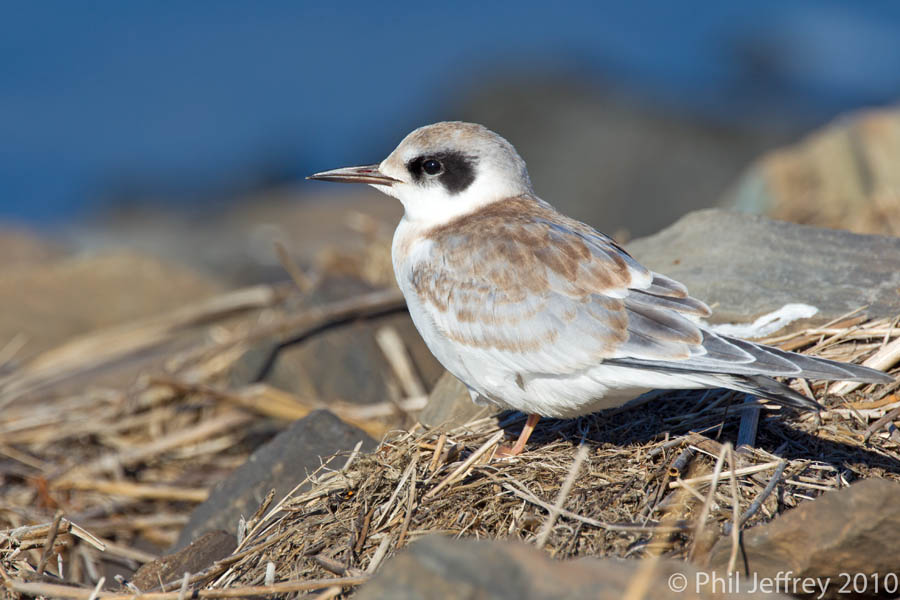
Dominant numbers were Semipalmated Sandpipers, all but one adults in worn breeding plumage. Short-billed Dowitchers came in second (also one juvenile), with lesser numbers of Least Sandpipers, Semipalmated Plovers, both Yellowlegs species. What was a surprise were a large number of Stilt Sandpipers, particularly in the freshwater pool, where a ball-park estimate of 100 means that's more than I remember seeing in any single day. Nice additions were American Avocet (my first in NJ), Wilson's Phalarope, two Western Sandpipers with residual rufous scapulars showing in plumage fairly well-advanced into basic/nonbreeding, and a few Whimbrels including four fly-overs. I did not see any Willets, and the Eastern ssp is probably vacating its breeding grounds, to be supplanted by the Western ssp later in the fall. Gull-billed Terns were first-of-year for me - I had around 10 including at least 3 juveniles, with a few Least and Caspians but no Commons this time around. Clapper Rails were also first of year, and I had two venturing cautiously out onto the open mud.
Apart from a full complement of Ospreys (all platforms occupied - I wonder if Hurricane Sandy took down all the dead trees coastally), I had a single Northern Harrier and no Peregrines, although they may have been around since the shorebirds were more than a little skittish.
Showing posts with label Brigantine NWR. Show all posts
Showing posts with label Brigantine NWR. Show all posts
Monday, August 12, 2013


Saturday, November 26, 2011
Barnegat, Tuckerton, Brig/Forsythe
I did a fairly conventional coastal route on Saturday morning - starting at Barnegat for something of a quick "coverage" visit, I found the state park closed (opens 9am these days?) and a lot of fishermen on the jetty and elsewhere. There was also a lot of boat traffic heading out of the inlet, so there were no birds in the inlet itself. However there were a lot of birds in the bay - recent warm weather undoubtedly contributed to the presence of Forster's Terns, although they are quite hardy. Also present was a substantially less hardy first winter Common Tern. Bonoparte's Gulls were particularly numerous and it seems that this species (along with sea ducks, Gannets and Red-throated Loons) have been on the move in large numbers this past week. There were actually relatively few loons in the bay. I took a look out toward the ocean from the end of the concrete walk and could see several groups of Northern Gannets headed south - surely meaning that thousands were on the move.
I left Barnegat pretty quickly - something that proved to be a mistake since both Western Tanager and Ash-throated Flycatcher were reported from the state park later that morning.
Great Bay WMA at Tuckerton was pretty quiet and I saw none of the Sharp-tailed Sparrows that I had gone there to look for. Boat-tailed Grackles and Black-bellied Plovers were the only birds of note.
Finally, then, to Brigantine division of Forsythe NWR where Tundra Swans have moved in, along with a much larger flock of Snow Geese than on my last visit here. Yellow-rumped Warblers and a heard-only Eastern Phoebe were enjoying the warm temperatures, but as usual with Brig in late fall it was mainly about ducks: Northern Pintail, Mallard, American Black Duck and Green-winged Teal were plentiful and supplemented by Ruddy Duck, Bufflehead, Scaup sp., Hooded Merganser. Raptor sp. were mostly Northern Harriers with one or two Peregrines and a single immature Bald Eagle.
I left Barnegat pretty quickly - something that proved to be a mistake since both Western Tanager and Ash-throated Flycatcher were reported from the state park later that morning.
Great Bay WMA at Tuckerton was pretty quiet and I saw none of the Sharp-tailed Sparrows that I had gone there to look for. Boat-tailed Grackles and Black-bellied Plovers were the only birds of note.
Finally, then, to Brigantine division of Forsythe NWR where Tundra Swans have moved in, along with a much larger flock of Snow Geese than on my last visit here. Yellow-rumped Warblers and a heard-only Eastern Phoebe were enjoying the warm temperatures, but as usual with Brig in late fall it was mainly about ducks: Northern Pintail, Mallard, American Black Duck and Green-winged Teal were plentiful and supplemented by Ruddy Duck, Bufflehead, Scaup sp., Hooded Merganser. Raptor sp. were mostly Northern Harriers with one or two Peregrines and a single immature Bald Eagle.
Monday, October 17, 2011
Brigantine and Tuckerton Oct 16th
(Catching up with old neglected sightings)
I went to Tuckerton and Brigantine NWR on a windy but sunny Sunday morning to pursue reported Ammodramus sparrows, with little success, but ended up with my first Cape May Warbler for NJ (other omissions that you might consider surprising include Bay-breasted, Wilson's and Tennessee).
At Tuckerton the brisk wind had the passerines seeking cover, so it was a bad day for sparrows and I was a little early for a high tide to push the sparrows out of the saltmarsh. Instead I contented myself with multiple flyover shorebird flocks: Black-bellied Plover, Red Knot, Sanderling, Dunlin, Semipalmated/Western Sandpipers (uncertain which). A sheltered spot along Great Bay Blvd yielded one or perhaps two Cape May Warblers but it was mainly Yellow-rumped Warblers in that flock. Northern Flicker along that road, somewhat out of habitat also provided the impression of migration. There was also a brief glimpse of a fat hummingbird. I'm calling it Ruby-throated by default, not least of all because fall migrant hummingbirds are often loaded with fat prior to migration and look bigger - but I really can't rule out Selasphorus hummingbird (Rufous/Allen's) for which the date and the location would also be possible.
Further down the road at Brigantine NWR there were some shorebird flocks, largely the same composition but without the Knot, and quite a few waterfowl. For some strange reason I had left the scope at home so I lacked things like Wigeon and Gadwall but the other usual suspects: Am. Black Duck, Mallard, Shoveler, Green-winged Teal, abundant Northern Pintail. There was also a small flock of Snow Geese - far short of the population that usually winters here so apparently a vanguard. Unlike Brant Geese, which tend to do the whole migration in one flight, non-stop, Snow Geese stage at multiple points as they "drift" south.
There was a lot of raptor activity at Brig, including at least two Bald Eagles, a few Northern Harriers and one or two Peregrines which were enthusiastically harassing anything small in sight (so I assume they were hungry). There were also noteworthy flocks of two other species: Forster's Terns present in quite high numbers, and also good numbers of Double-crested Cormorant, apparently mostly immatures.
Snow Goose
American Black Duck
Mallard
Northern Shoveler
Northern Pintail
Green-winged Teal
Double-crested Cormorant
Great Blue Heron
Great Egret
Snowy Egret
Bald Eagle
Northern Harrier
Red-tailed Hawk
Peregrine Falcon
Black-bellied Plover
Red Knot
Sanderling
Western or Semipalmated Sandpiper
Dunlin
Dowitcher sp.
Forster's Tern
Ruby-throated Hummingbird
Northern Flicker
Tree Swallow
Cape May Warbler
Yellow-rumped Warbler
Song Sparrow
Boat-tailed Grackle
I went to Tuckerton and Brigantine NWR on a windy but sunny Sunday morning to pursue reported Ammodramus sparrows, with little success, but ended up with my first Cape May Warbler for NJ (other omissions that you might consider surprising include Bay-breasted, Wilson's and Tennessee).
At Tuckerton the brisk wind had the passerines seeking cover, so it was a bad day for sparrows and I was a little early for a high tide to push the sparrows out of the saltmarsh. Instead I contented myself with multiple flyover shorebird flocks: Black-bellied Plover, Red Knot, Sanderling, Dunlin, Semipalmated/Western Sandpipers (uncertain which). A sheltered spot along Great Bay Blvd yielded one or perhaps two Cape May Warblers but it was mainly Yellow-rumped Warblers in that flock. Northern Flicker along that road, somewhat out of habitat also provided the impression of migration. There was also a brief glimpse of a fat hummingbird. I'm calling it Ruby-throated by default, not least of all because fall migrant hummingbirds are often loaded with fat prior to migration and look bigger - but I really can't rule out Selasphorus hummingbird (Rufous/Allen's) for which the date and the location would also be possible.
Further down the road at Brigantine NWR there were some shorebird flocks, largely the same composition but without the Knot, and quite a few waterfowl. For some strange reason I had left the scope at home so I lacked things like Wigeon and Gadwall but the other usual suspects: Am. Black Duck, Mallard, Shoveler, Green-winged Teal, abundant Northern Pintail. There was also a small flock of Snow Geese - far short of the population that usually winters here so apparently a vanguard. Unlike Brant Geese, which tend to do the whole migration in one flight, non-stop, Snow Geese stage at multiple points as they "drift" south.
There was a lot of raptor activity at Brig, including at least two Bald Eagles, a few Northern Harriers and one or two Peregrines which were enthusiastically harassing anything small in sight (so I assume they were hungry). There were also noteworthy flocks of two other species: Forster's Terns present in quite high numbers, and also good numbers of Double-crested Cormorant, apparently mostly immatures.
Snow Goose
American Black Duck
Mallard
Northern Shoveler
Northern Pintail
Green-winged Teal
Double-crested Cormorant
Great Blue Heron
Great Egret
Snowy Egret
Bald Eagle
Northern Harrier
Red-tailed Hawk
Peregrine Falcon
Black-bellied Plover
Red Knot
Sanderling
Western or Semipalmated Sandpiper
Dunlin
Dowitcher sp.
Forster's Tern
Ruby-throated Hummingbird
Northern Flicker
Tree Swallow
Cape May Warbler
Yellow-rumped Warbler
Song Sparrow
Boat-tailed Grackle
Saturday, July 23, 2011
Brig 7/23
Short birding trip (truncated by heat and Tour de France coverage). I went zero for everything on the rarity front at Brig despite checking Glossy Ibis facial skin color (for White-faced) and there being feeding frenzies at very low tide at a few of the sluices (Forster's Tern, Laughing Gull, Double-crested Cormorant).
Shorebird numbers were up, mainly Semipalmated Sandpiper (abundant, thousands) and Short-billed Dowitcher. My best birds were Whimbrel and Pectoral Sandpiper, both year birds, before heading for cover and air-conditioning.
Shorebird numbers were up, mainly Semipalmated Sandpiper (abundant, thousands) and Short-billed Dowitcher. My best birds were Whimbrel and Pectoral Sandpiper, both year birds, before heading for cover and air-conditioning.
Monday, July 11, 2011
Brigantine NWR
A warm Sunday visit to Brigantine, although I actually started off at Great Bay Blvd in Tuckerton, just to the north. Along Great Bay there were multiple singing Seaside Sparrows but I was unable to come up with Saltmarsh (Sharp-tailed) Sparrow. Also there: Boat-tailed Grackle, Laughing Gull, distant Forster's Terns, inevitable Red-winged Blackbirds, sizable flocks of Tree Swallow on the wires, and I heard a couple of Clapper Rails. A couple of Least-ish Sandpipers flew over the road, a reminder that fall shorebird migration had already started.
Then to Brigantine where the Purple Martin colony was in full swing. The tide appeared to be high but on the way down. Activity at Brig wasn't all that impressive, especially on the shorebird front: Short-billed Dowitcher, Lesser Yellowlegs, Greater Yellowlegs, Spotted Sandpiper, Least Sandpiper, Stilt Sandpiper. OK, the Stilt was certainly a decent find, and was an adult in fading alternate plumage. At this time of year pretty much all of the birds are adult in faded alternate plumage since it's too early for juveniles to be in a condition to migrate south. Terns included the inevitable large numbers of Forster's which nest out in the saltmarsh and are just starting to show signs of molt in a few cases (into basic plumage). At the south-eastern sluice there was a single Common Tern (semi-reliable here) and a few Gull-billed Terns were dotted around the place. Canada Geese appeared to be at an all-time low for a summer in which I'd normally expect to find lots of juveniles along the drive. There were several Osprey nests with young but the really photographically convenient nest from last year was inactive - I thought that one was a little too close to the wildlife drive and is inactive in most years. I didn't find Saltmarsh at Brig either, but Seaside Sparrow, Marsh Wren, Common Yellowthroat, Song Sparrow, Indigo Bunting and Blue Grosbeak were present. The male Blue Grosbeak was singing and was my first one for the year - not at all common this far north. A fairly typical results for Brigantine but nothing at all compelling.
(Update: 7/17 there were pretty much the same species but also Least Tern family group with juveniles).
Then to Brigantine where the Purple Martin colony was in full swing. The tide appeared to be high but on the way down. Activity at Brig wasn't all that impressive, especially on the shorebird front: Short-billed Dowitcher, Lesser Yellowlegs, Greater Yellowlegs, Spotted Sandpiper, Least Sandpiper, Stilt Sandpiper. OK, the Stilt was certainly a decent find, and was an adult in fading alternate plumage. At this time of year pretty much all of the birds are adult in faded alternate plumage since it's too early for juveniles to be in a condition to migrate south. Terns included the inevitable large numbers of Forster's which nest out in the saltmarsh and are just starting to show signs of molt in a few cases (into basic plumage). At the south-eastern sluice there was a single Common Tern (semi-reliable here) and a few Gull-billed Terns were dotted around the place. Canada Geese appeared to be at an all-time low for a summer in which I'd normally expect to find lots of juveniles along the drive. There were several Osprey nests with young but the really photographically convenient nest from last year was inactive - I thought that one was a little too close to the wildlife drive and is inactive in most years. I didn't find Saltmarsh at Brig either, but Seaside Sparrow, Marsh Wren, Common Yellowthroat, Song Sparrow, Indigo Bunting and Blue Grosbeak were present. The male Blue Grosbeak was singing and was my first one for the year - not at all common this far north. A fairly typical results for Brigantine but nothing at all compelling.
(Update: 7/17 there were pretty much the same species but also Least Tern family group with juveniles).
Sunday, February 20, 2011
Eurasian Wigeon, Feb 20th
After balking at harsh conditions at Barnegat Inlet at dawn, I went down to Brigantine/Forsythe NWR as a second option.
Waterfowl numbers are building here and the essentially ice-free freshwater impoundment was loaded with birds like Green-winged Teal, Northern Shoveler, Northern Pintail, a surprisingly large flock of Canvasback, and a few Gadwall and American Wigeon mixed in with some Tundra Swans. While scanning the Wigeons one male turned it's head and reflected the sun with a dramatic chestnut - a male Eurasian Wigeon. I found it even with binoculars but a scope confirmed the identity. The Snow Goose flock at Brig seems to be growing, although it's always hard to estimate numbers as they may be broken up into multiple flocks. However the re-appearance of Snow Geese at Jamaica Bay suggests that they are on a northbound drift with the warming weather. (Unlike Brant, which essentially leave the NYC area en masse and fly non-stop to breeding territories, Snow Geese stage at multiple locations).
Back at Barnegat Inlet in only slightly less hostile weather I came up with an 'Ipswich' Savannah Sparrow on the rocks.
Waterfowl numbers are building here and the essentially ice-free freshwater impoundment was loaded with birds like Green-winged Teal, Northern Shoveler, Northern Pintail, a surprisingly large flock of Canvasback, and a few Gadwall and American Wigeon mixed in with some Tundra Swans. While scanning the Wigeons one male turned it's head and reflected the sun with a dramatic chestnut - a male Eurasian Wigeon. I found it even with binoculars but a scope confirmed the identity. The Snow Goose flock at Brig seems to be growing, although it's always hard to estimate numbers as they may be broken up into multiple flocks. However the re-appearance of Snow Geese at Jamaica Bay suggests that they are on a northbound drift with the warming weather. (Unlike Brant, which essentially leave the NYC area en masse and fly non-stop to breeding territories, Snow Geese stage at multiple locations).
Back at Barnegat Inlet in only slightly less hostile weather I came up with an 'Ipswich' Savannah Sparrow on the rocks.
Sunday, February 13, 2011
Barnegat and Brigantine
The deferred trip to Barnegat happened on Sunday, although in this case I expected the cloud was still going to be a problem, and apart from a short blue sky patch the light was mediocre to poor. There was also a rising strong southerly wind that buffeted me on the end of the jetty. Not ideal conditions but the jetty itself was almost ice-free.
There was a small freighter moving up and down the inlet, apparently part of some dredging operation. This spooked many birds out of the inlet and might explain why I saw no loons whatsoever on this trip. Other regulars: Long-tailed Duck, Red-breasted Merganser, were in relatively low numbers. The usual star of this location - the tame Harlequin Ducks - were present in small groups along the jetty, probably up to 20 or so. Shorebirds were few in number - a few Dunlin and Sanderling, but no Ruddy Turnstones or Purple Sandpipers. This might be a factor of the tide, which was very low indeed when I got there and was still low when I left 3 hours later. 30-odd Common Eiders, and 20-30 each of Surf Scoter and Black Scoter were at the mouth of the inlet. There were large (hundreds) flocks of Greater Scaup a flying south a little further out. The scoter flocks appeared to be mostly male, and as luck would have it one or two came in close to the jetty - at one point a mixed flock of 2 adult male Surf, 2 immature male Surf, 1 female Surf and 2 adult male Black Scoters. I don't normally get to see Scoters that close, and the only regret was that the light wasn't better for photography.
Add in Great Cormorant, Brant and a Red-breasted Nuthatch at the parking lot of the state park and that's pretty much all the birds of note. Harlequin and Surf Scoter were new for the year.
Then on to Brigantine, where it was partly sunny and so windy the car was getting rather buffeted and dirt was getting blown into the car. The freshwater pool was rather icy but with some open water. The brackish pool was predictably much more open. It was a pretty good day for waterfowl numbers, if perhaps not diversity: American Black Duck, Mallard, Northern Pintail, Gadwall, American Wigeon, Snow Goose (large flock), Tundra Swan (20++), Mute Swan, Bufflehead, Hooded Merganser. Northern Harrier and Peregrine were the only raptors, but the Peregrine was probably the reason why the large flock (a thousand or two) of Dunlin was rather nervous as it roamed around the brackish impoundment. The tide was so low that the water in the sluices was too low to attract diving ducks. I had a bit of a time crunch so didn't spend as much time at Brig as I normally do, but it was still moderately productive. Peregrine Falcon, Snow Goose and Tundra Swan were new birds for the year.
Another entry in the photographers-as-bozos list: an SUV with PA vanity plates "BIRD PIX" was repeatedly pulling up onto the grassy edge of the drive - which is already more than wide enough to let traffic pass. I guess erosion and habitat damage are less important than getting 2 feet closer to the bird.
There was a small freighter moving up and down the inlet, apparently part of some dredging operation. This spooked many birds out of the inlet and might explain why I saw no loons whatsoever on this trip. Other regulars: Long-tailed Duck, Red-breasted Merganser, were in relatively low numbers. The usual star of this location - the tame Harlequin Ducks - were present in small groups along the jetty, probably up to 20 or so. Shorebirds were few in number - a few Dunlin and Sanderling, but no Ruddy Turnstones or Purple Sandpipers. This might be a factor of the tide, which was very low indeed when I got there and was still low when I left 3 hours later. 30-odd Common Eiders, and 20-30 each of Surf Scoter and Black Scoter were at the mouth of the inlet. There were large (hundreds) flocks of Greater Scaup a flying south a little further out. The scoter flocks appeared to be mostly male, and as luck would have it one or two came in close to the jetty - at one point a mixed flock of 2 adult male Surf, 2 immature male Surf, 1 female Surf and 2 adult male Black Scoters. I don't normally get to see Scoters that close, and the only regret was that the light wasn't better for photography.
Add in Great Cormorant, Brant and a Red-breasted Nuthatch at the parking lot of the state park and that's pretty much all the birds of note. Harlequin and Surf Scoter were new for the year.
Then on to Brigantine, where it was partly sunny and so windy the car was getting rather buffeted and dirt was getting blown into the car. The freshwater pool was rather icy but with some open water. The brackish pool was predictably much more open. It was a pretty good day for waterfowl numbers, if perhaps not diversity: American Black Duck, Mallard, Northern Pintail, Gadwall, American Wigeon, Snow Goose (large flock), Tundra Swan (20++), Mute Swan, Bufflehead, Hooded Merganser. Northern Harrier and Peregrine were the only raptors, but the Peregrine was probably the reason why the large flock (a thousand or two) of Dunlin was rather nervous as it roamed around the brackish impoundment. The tide was so low that the water in the sluices was too low to attract diving ducks. I had a bit of a time crunch so didn't spend as much time at Brig as I normally do, but it was still moderately productive. Peregrine Falcon, Snow Goose and Tundra Swan were new birds for the year.
Another entry in the photographers-as-bozos list: an SUV with PA vanity plates "BIRD PIX" was repeatedly pulling up onto the grassy edge of the drive - which is already more than wide enough to let traffic pass. I guess erosion and habitat damage are less important than getting 2 feet closer to the bird.
Friday, December 24, 2010
Barnegat, Brigantine

Rolling the dice on a traditional NJ coastal route I started at Barnegat Inlet a little after sunup, although more accurately presented as sun-behind-overcast-rise. For a late Xmas present I request a weatherman voodoo doll.
The tide was so high that the breakwater (south side of the inlet, as usual) was surrounded by water on all sides beyond the concrete paved section. This also meant that there was some inundation further along. That didn't make a great deal of difference since with the tide so high not very much was perched on it. I saw fly-by Ruddy Turnstone, Dunlin and Purple Sandpiper. On the walk back down the breakwater from half-way I added Black-bellied Plover. A (presumed) Savannah Sparrow was also hanging out, too far to ID with any certainty but also likely to be an Ipswich ssp.
Large numbers of ducks milled around the ocean side of the inlet - scoters and Eiders and the common Long-tailed Ducks. I got all 3 species of Scoter (Black, Surf, White-winged) and a small group of Eider flying down the inlet on the rising tide. Red-breasted Mergansers periodically flew by. There was a relatively small group of Harlequin Ducks next to the breakwater but the tide was really too high to induce them to perch up. Common and Red-throated Loon were in the inlet. So in fact despite the high tide and unfavorable conditions I managed to find a perfectly typical range of Barnegat species. I left when two duck hunting boats headed out into the inlet. This appears to be a new feature this year, and as far as I can tell not illegal, but rather screws birding here.
Down at the Brigantine division of Forsythe NWR I could also hear shots out in the saltmarsh, but not right next to the impoundments. There was a flock of Snow Geese near start of the drive - normally they are further south and east of this, but I didn't find a Ross's with them - the flock was rather dispersed. Much of the fresh water impoundment was frozen solid - 30+ Tundra Swans and other waterfowl were clustered around the open patch. The southerly salt-water impoundment was about 50% ice free. The tide here was also very high - perhaps as high as I have seen it and much of the saltmarsh was under water. The flocks of Dunlin were resting on ice mats still stuck to the marsh grasses out in the bay. Waterfowl numbers were decent, although mainly American Black Duck, Northern Pintail and Mallard. Hooded Mergansers and Bufflehead were present, as was a nice surprise in a single female Common Merganser near one of the sluices giving good photo ops. Common Mergansers are usually pushed down from the north after hard freezes and it has been a cold December. Passerines were limited to a flock of Red-winged Blackbirds and a few Eastern Meadowlarks
Raptors were not especially numerous but I did have Red-tailed Hawk, Northern Harrier, Peregrine and a Bald Eagle. The eagle was an adult, but the Peregrine showed a small patch of brown on its otherwise slate-gray back, suggesting a first year bird.
I went back to Barnegat on the way back home and found nothing new, although I did watch a cooperative Common Loon hunting crabs near the end of the concrete paved section of the breakwater.
Saturday, November 27, 2010
Barnegat, Brigantine
Saturday was sunny but breezy, and I headed out for a fairly traditional coastal route.
First, Barnegat Inlet (Barnegat Light) were at 7:44 the breakwater held a lot of people - mainly fishermen - out of all proportion to birding opportunities. The wind was already fresh, it was relatively cold, and there was a dearth of birds in the inlet itself so I went into quick scouting mode. Perhaps this was not totally unrelated to the extensive small boat traffic. Of interest was a fly-by immature Great Cormorant, and several small groups of Bonaparte's Gulls. Last winter there weren't many Bonaparte's Gulls around in general, so these were actually my year list ones. This winter there's a bonanza of them.
In search of more productive areas I went south to Brigantine (or if you want to be formal, the Brigantine Division of Forsythe National Wildlife Refuge). The wind had risen and was quite strong here, so there was little chance of finding a Cave Swallow. I did two tours around the impoundment and found decent numbers of ducks, a good flock of Tundra Swans (also a year bird) and Green-winged Teal and some shorebirds, a few of which were Western Sandpipers making for an implausible three year-bird day in late November. Northern Harriers were around in numbers, terrorizing the Teal again, but the Peregrines did not seem to be present or at least not hunting. A fuller list follows (Brigantine unless noted):
Snow Goose
Brant
Mute Swan
Tundra Swan (50-ish)
American Black Duck
Mallard
Northern Shoveler
Northern Pintail
Green-winged Teal
Long-tailed Duck (Barnegat)
Bufflehead
Hooded Merganser
Red-breasted Merganser
Red-throated Loon (Barnegat)
Pied-billed Grebe
Double-crested Cormorant
Great Cormorant (Barnegat)
Great Blue Heron
Northern Harrier
Red-tailed Hawk
American Coot
Black-bellied Plover
Western Sandpiper
Dunlin
Savannah Sparrow
Eastern Meadowlark
First, Barnegat Inlet (Barnegat Light) were at 7:44 the breakwater held a lot of people - mainly fishermen - out of all proportion to birding opportunities. The wind was already fresh, it was relatively cold, and there was a dearth of birds in the inlet itself so I went into quick scouting mode. Perhaps this was not totally unrelated to the extensive small boat traffic. Of interest was a fly-by immature Great Cormorant, and several small groups of Bonaparte's Gulls. Last winter there weren't many Bonaparte's Gulls around in general, so these were actually my year list ones. This winter there's a bonanza of them.
In search of more productive areas I went south to Brigantine (or if you want to be formal, the Brigantine Division of Forsythe National Wildlife Refuge). The wind had risen and was quite strong here, so there was little chance of finding a Cave Swallow. I did two tours around the impoundment and found decent numbers of ducks, a good flock of Tundra Swans (also a year bird) and Green-winged Teal and some shorebirds, a few of which were Western Sandpipers making for an implausible three year-bird day in late November. Northern Harriers were around in numbers, terrorizing the Teal again, but the Peregrines did not seem to be present or at least not hunting. A fuller list follows (Brigantine unless noted):
Snow Goose
Brant
Mute Swan
Tundra Swan (50-ish)
American Black Duck
Mallard
Northern Shoveler
Northern Pintail
Green-winged Teal
Long-tailed Duck (Barnegat)
Bufflehead
Hooded Merganser
Red-breasted Merganser
Red-throated Loon (Barnegat)
Pied-billed Grebe
Double-crested Cormorant
Great Cormorant (Barnegat)
Great Blue Heron
Northern Harrier
Red-tailed Hawk
American Coot
Black-bellied Plover
Western Sandpiper
Dunlin
Savannah Sparrow
Eastern Meadowlark
Sunday, November 7, 2010
White-tailed Kite and Brigantine
I made three visits to various parts of the Edwin B. Forsythe National Wildlife Refuge on Sunday. First and last were a visit to the Barnegat impoundment (Barnegat division of Forsythe NWR) where there was a persistent White-tailed Kite. The first time around, shortly after dawn, netted various ducks and herons but no kite. The second time around on the way back home the kite had settled on a dead tree in the far distance half-way across the bay, but was visible in scope views and flew briefly while I was there.
In the intervening time I went down to the Brigantine division, the more traditional area for birders visiting Forsythe NWR. En route I stopped at Barnegat Inlet, found the tide very high, a lot of chop in the inlet and very few birds milling around. A roving flock of Juncos and other fly-by passerines suggested migration movement off the north wind.
The tide was also very high at Brigantine, with much of the saltmarsh at least somewhat inundated. A lot of the ducks were coming in at middle altitude and settling into the north-east impoundment. Shorebirds were limited to several flocks of agitated Dunlin and a few Black-bellied Plovers. One of the reasons that they had good reason to be agitated were two Peregrines and several Northern Harriers, although those raptors were harassing a large flock of Green-winged Teal when I saw them. Blue-winged Teal was the best duck, and there was also Northern Pintail, Mallard, many American Black Duck, Bufflehead, Hooded Merganser and Ruddy Duck. A small flock of Brant and a moderate-sized flock of Snow Geese were in the impoundments but windy conditions made for few photo ops. The most active part was on the south-east sluice where the influx of water and small fish made for a Double-crested Cormorant and Gull feeding frenzy. Given the wind the passerines kept their head down but I did see a few fly-by Savannah Sparrows.
I returned north via Barnegat impoundment for the White-tailed Kite and a brief visit to Well's Mills County Park where the feeders held only titmice, chickadees and Juncos. At Well's Mills they've also removed the trees to the east of the visitor center which provided some protection around the periodic drainage pond for small birds drinking there. Since it's not a spring-fed pond that patch was also dry - a shame since last winter it did attract some birds in that small area.
In the intervening time I went down to the Brigantine division, the more traditional area for birders visiting Forsythe NWR. En route I stopped at Barnegat Inlet, found the tide very high, a lot of chop in the inlet and very few birds milling around. A roving flock of Juncos and other fly-by passerines suggested migration movement off the north wind.
The tide was also very high at Brigantine, with much of the saltmarsh at least somewhat inundated. A lot of the ducks were coming in at middle altitude and settling into the north-east impoundment. Shorebirds were limited to several flocks of agitated Dunlin and a few Black-bellied Plovers. One of the reasons that they had good reason to be agitated were two Peregrines and several Northern Harriers, although those raptors were harassing a large flock of Green-winged Teal when I saw them. Blue-winged Teal was the best duck, and there was also Northern Pintail, Mallard, many American Black Duck, Bufflehead, Hooded Merganser and Ruddy Duck. A small flock of Brant and a moderate-sized flock of Snow Geese were in the impoundments but windy conditions made for few photo ops. The most active part was on the south-east sluice where the influx of water and small fish made for a Double-crested Cormorant and Gull feeding frenzy. Given the wind the passerines kept their head down but I did see a few fly-by Savannah Sparrows.
I returned north via Barnegat impoundment for the White-tailed Kite and a brief visit to Well's Mills County Park where the feeders held only titmice, chickadees and Juncos. At Well's Mills they've also removed the trees to the east of the visitor center which provided some protection around the periodic drainage pond for small birds drinking there. Since it's not a spring-fed pond that patch was also dry - a shame since last winter it did attract some birds in that small area.
Monday, September 6, 2010
Forsythe/Brigantine NWR: Yellow-headed Blackbirds and grassland shorebirds
The problem with being social is that it eats into the early morning birding starts. In this case I got a tardy start at Brigantine NWR - a shameful 8:30am. I did two loops around the auto loop, and on the first loop mostly ignored shorebirds in the NW pool as I headed to the NE "pool" which is mainly a grass flat now. En route I noticed that most of the Forster's Terns were in or near basic plumage now. It was high tide, and apparently there were a lot of schooling fish since there were multiple cormorant-tern-heron feeding frenzies at locations in the southern pool. There were a lot of Snowy/Great Egrets, Forster's Terns and Double-crested Cormorants at these frenzies.
There were also a lot of swallows. Thousands. At one point I looked across the impoundements and got a sense of the magnitude since as far as I looked the air teemed with Tree, Barn and Bank Swallows - there were a reasonable number of the latter too.
Outside the impoundments I found a group of at least 10 Saltmarsh Sharp-tailed Sparrows perched up and apparently waiting out the high tide - this being comfortably my all time high count. A mix of adults and immatures and accompanied by a vocal Clapper Rail perched up in the saltmarsh.
Finally I made it around to the dog leg, dodging caterpillars crossing the tour road as I went, and scanned the grass flats. Heat haze was cutting into visibility already, but I found two American Golden-Plovers and a Buff-breasted Sandpiper on the first pass, and then just as I settled on a Baird's the group took flight. I found a more cooperative Baird's Sandpiper a little later, as well as a total of 4 Buff-breasted's. The surprise was finding two Yellow-headed Blackbirds sitting on the edge of the grass flats as I searched for Baird's and Buff-breasted's. They sat there for a while letting me assess bill and tail length to make sure it wasn't some aberrant Boat-tailed Grackle plumage (too yellow in any event). First time I'd seen these in NJ.
On the second tour around the auto loop I added a few shorebirds: White-rumped Sandpiper, Whimbrel, Short-billed Dowitcher and Lesser Yellowlegs to the list, but it was getting hotter and I didn't linger. Notable absence was Willet - presumably all the Eastern ssp birds have left and the Western ssp ones have yet to take their place.
American Black Duck
Double-crested Cormorant
Great Blue Heron
Great Egret
Snowy Egret
Osprey
Bald Eagle
Whimbrel
Black-bellied Plover
American Golden-Plover
Semipalmated Plover
Greater Yellowlegs
Lesser Yellowlegs
Semipalmated Sandpiper
Least Sandpiper
White-rumped Sandpiper
Baird's Sandpiper
Buff-breasted Sandpiper
Short-billed Dowitcher
Caspian Tern
Forster's Tern
Black Skimmer
Tree Swallow
Bank Swallow
Barn Swallow
Yellow Warbler
Common Yellowthroat
Saltmarsh Sharp-tailed Sparrow
Yellow-headed Blackbird
Saturday, August 28, 2010
Brigantine NWR, August 28th
Making a little of a lethargic start I opted to go check out shorebirds at Brigantine NWR, with high tide expected around the middle of the day. There was a large flock of Tree Swallows at the Gull Pond tower turn-around but the tower was under construction.
Recent rain seem to be reflected in the pools being relatively high on water, although the north-western pool looked like it had been drained down to provide more shorebird habitat. I came away with not too much diversity, at least in part because I went around prior to high tide and because the driest pool put the shorebirds deep into the heat haze. Best shorebirds were a couple of Pectoral Sandpipers, missing the Buff-breasted and Avocets seen later in the morning. Spotted Sandpiper, both Yellowlegs, Willet, Semipalmated Sandpiper (abundant), Least Sandpiper, Black-bellied Plover and Ruddy Turnstone rounded out the total. Ospreys and two Peregrines were the raptors seen. At the "tern sluice" there were no Common Terns but a nice extra were two juvenile Least Terns and a molting adult - a species I see infrequently there. Other terns included abundant Forster's, a few Caspians, and Black Skimmer. Two Blue Grosbeaks at the dogleg and a fast moving Ruby-throated Hummingbird were two other notables.
Recent rain seem to be reflected in the pools being relatively high on water, although the north-western pool looked like it had been drained down to provide more shorebird habitat. I came away with not too much diversity, at least in part because I went around prior to high tide and because the driest pool put the shorebirds deep into the heat haze. Best shorebirds were a couple of Pectoral Sandpipers, missing the Buff-breasted and Avocets seen later in the morning. Spotted Sandpiper, both Yellowlegs, Willet, Semipalmated Sandpiper (abundant), Least Sandpiper, Black-bellied Plover and Ruddy Turnstone rounded out the total. Ospreys and two Peregrines were the raptors seen. At the "tern sluice" there were no Common Terns but a nice extra were two juvenile Least Terns and a molting adult - a species I see infrequently there. Other terns included abundant Forster's, a few Caspians, and Black Skimmer. Two Blue Grosbeaks at the dogleg and a fast moving Ruby-throated Hummingbird were two other notables.
Sunday, July 4, 2010
Fall migration begins (July 3rd)
Two successive weekend visits to Brigantine NWR turned up mostly the same species both times with minor variations and one embellishment: two small flocks of shorebirds on July 3rd. Forster's Terns were numerous, as were greenheads. On 6/28 two Common Terns were seen at the south-eastern sluice where I often observe them, with one Common Tern particularly cooperative for photos and video. Saltmarsh Sharp-tailed Sparrows were also there, as were two or three pairs of territorial Willets apparently fighting over one small grassy island.
On 7/3 the Common Terns were absent at low tide. Further around there were Short-billed Dowitchers, peep sp (probably Least), a Caspian Tern and a Bald Eagle that flushed the lot of them. The shorebird flocks were the first evidence that fall migration - at least for shorebirds - was starting, although I had started to see small icterid flocks accumulating for their early fall migration and Bobolinks were reported at Cape May on 7/8, presumably also southbound.
Birds are still breeding, however, with juvenile-sounding noises coming from Chipping Sparrow and Northern Cardinal nests in my yard, and a House Wren apparently nesting there (second brood ?).
Cumulative species list from 6/28 and 7/3 Brigantine visits:
American Black Duck
Double-crested Cormorant
Great Blue Heron
Great Egret
Snowy Egret
Little Blue Heron
Tricolored Heron
Black-crowned Night-Heron
Glossy Ibis
Osprey
Bald Eagle
Peregrine Falcon
American Oystercatcher
Greater Yellowlegs
Lesser Yellowlegs
Least Sandpiper
Short-billed Dowitcher
Gull-billed Tern
Caspian Tern
Common Tern
Forster's Tern
Black Skimmer
Ruby-throated Hummingbird
Purple Martin
Tree Swallow
Marsh Wren
Common Yellowthroat
Saltmarsh Sharp-tailed Sparrow
Seaside Sparrow
Song Sparrow
Indigo Bunting
Red-winged Blackbird
American Goldfinch
On 7/3 the Common Terns were absent at low tide. Further around there were Short-billed Dowitchers, peep sp (probably Least), a Caspian Tern and a Bald Eagle that flushed the lot of them. The shorebird flocks were the first evidence that fall migration - at least for shorebirds - was starting, although I had started to see small icterid flocks accumulating for their early fall migration and Bobolinks were reported at Cape May on 7/8, presumably also southbound.
Birds are still breeding, however, with juvenile-sounding noises coming from Chipping Sparrow and Northern Cardinal nests in my yard, and a House Wren apparently nesting there (second brood ?).
Cumulative species list from 6/28 and 7/3 Brigantine visits:
American Black Duck
Double-crested Cormorant
Great Blue Heron
Great Egret
Snowy Egret
Little Blue Heron
Tricolored Heron
Black-crowned Night-Heron
Glossy Ibis
Osprey
Bald Eagle
Peregrine Falcon
American Oystercatcher
Greater Yellowlegs
Lesser Yellowlegs
Least Sandpiper
Short-billed Dowitcher
Gull-billed Tern
Caspian Tern
Common Tern
Forster's Tern
Black Skimmer
Ruby-throated Hummingbird
Purple Martin
Tree Swallow
Marsh Wren
Common Yellowthroat
Saltmarsh Sharp-tailed Sparrow
Seaside Sparrow
Song Sparrow
Indigo Bunting
Red-winged Blackbird
American Goldfinch
Saturday, June 19, 2010
Southern NJ again
Let's try this all again, shall we. In fact I did exactly the same trip, ostensibly with better light, although when I got out of the car at Jake's Landing and looked westward I let out a stream of expletives as I saw storm clouds approaching. Sunny day my ass.
Nevertheless it was photographically more productive and the combination of Jake's Landing, South Cape May Meadows and Brigantine/Forsythe NWR. Compared to last week Jake's Landing was much the same, SCMM was a little less productive but still decent (and sunnier!) and Brigantine had Bank Swallow, Bald Eagle and a lot more voracious Greenheads to add to the total.
Gadwall
American Black Duck
Mallard
Double-crested Cormorant
Great Egret
Snowy Egret
Black-crowned Night-Heron
Glossy Ibis
Osprey
Bald Eagle
Clapper Rail
Semipalmated Plover
Killdeer
American Oystercatcher
Greater Yellowlegs
Willet
Gull-billed Tern
Common Tern
Forster's Tern
Least Tern
Eastern Kingbird
Purple Martin
Tree Swallow
Bank Swallow
Barn Swallow
Marsh Wren
Brown Thrasher
Cedar Waxwing
Seaside Sparrow
Indigo Bunting
Nevertheless it was photographically more productive and the combination of Jake's Landing, South Cape May Meadows and Brigantine/Forsythe NWR. Compared to last week Jake's Landing was much the same, SCMM was a little less productive but still decent (and sunnier!) and Brigantine had Bank Swallow, Bald Eagle and a lot more voracious Greenheads to add to the total.
Gadwall
American Black Duck
Mallard
Double-crested Cormorant
Great Egret
Snowy Egret
Black-crowned Night-Heron
Glossy Ibis
Osprey
Bald Eagle
Clapper Rail
Semipalmated Plover
Killdeer
American Oystercatcher
Greater Yellowlegs
Willet
Gull-billed Tern
Common Tern
Forster's Tern
Least Tern
Eastern Kingbird
Purple Martin
Tree Swallow
Bank Swallow
Barn Swallow
Marsh Wren
Brown Thrasher
Cedar Waxwing
Seaside Sparrow
Indigo Bunting
Monday, June 14, 2010
Southern NJ, June 12th

I headed out pre-dawn to try my luck with the weather and look for breeding birds in southern NJ. With rather mixed success. At 6:30am at Jake's Landing the typical birds were evident: Osprey with young, Seaside Sparrow, Marsh Wren, vocal Clapper Rails, Willets. I didn't find any Saltmarsh Sharp-tailed Sparrows and the cloud cover was not especially conducive to photography since photo ops and sunny intervals were rather asynchronous.
Headed back through the woodland to the road I heard Pine Warbler, Yellow-throated Warbler, White-eyed Vireo and saw Brown Thrasher. I decided to try and wait out the variable cloud cover and went to the nearby Sunset Rd bridge at Belleplain State Forest. Despite being early in the day the amount of song was limited: Ovenbird, Black-and-white Warbler, an emphatic Acadian Flycatcher were heard but there was no sign of Prothonotary Warbler or Louisiana Waterthrush. Or much else.
I went further down along the Delaware Bay shore and stopped at Kimball's Beach Rd at Cape May NWR to check out shorebirds - there in small numbers and to my eyes just Semipalmated Sandpipers, with no sign of their larger cousins (Dunlin, Sanderling, Turnstone, Knot).
From there I headed down to South Cape May Meadows (SCMM), the Nature Conservancy site near Cape May Point that is more correctly called "The Cape May Migratory Bird Refuge" these days. The weather was overcast so I went to the Concrete Ship and scanned the ocean, picking up a few Northern Gannets heading north. All immatures. At SCMM I left the camera in the car courtesy of unremitting cloud cover and walked around, seeing Piping Plovers getting agitated over every crow and Osprey. There were also Killdeer, American Oystercatcher, Black Skimmer, Least Tern and Foster's Tern. Best birds were the duo of singing Indigo Bunting and Blue Grosbeak at the entrance. Activity was relatively low and the light was pretty bad so I started to work my way north, filling up with gas near the road for Wildwood. I was just turning onto the Garden State Parkway northbound when I caught sight of a clearing patch in my rear view mirror, so turned around at the next exit and headed back to SCMM in the hopes of better light.
At SCMM I had basically the same species, but at least a little sun as the overcast cleared out for a while, and a few birds including Least Terns were relatively cooperative fishing near the viewing platform along northernmost trail. A small number of Common Terns dropped in, and at one point full alternate plumage adults, a first summer Common Tern were on the same sandbar as adult Forster's Tern and first summer Laughing Gulls. An interesting mix of plumages but apart from the Common Terns nothing new was seen on my second go around SCMM. Least Terns were in an active colony on the beach, and American Oystercatcher and Piping Plover chicks were present along the roped off areas of the beach.
Finally I went north once again and visited Brigantine/Forsythe NWR to see if there were any residual migrating shorebirds. While I did get a view of two Clapper Rails bathing in the channel, the number of shorebirds (apart from the breeding Willet) was quite low and consisted of three Greater Yellowlegs and a small group of Semipalmated Sandpipers. Gull-billed Tern was also a new bird for the day. Greenheads were out, but not yet in truly ferocious numbers and the dearth of shorebirds let me keep my car windows up for most of the time. The main benefit of birding Brig on this day is that it delayed my arrival home so that I missed the first half of that rather dire 1-1 draw between the USA and England in the World Cup.
Sunday, May 16, 2010
Brigantine, May 16th
After two park days and getting home from NYC at 4pm I somehow mustered the energy to do a late afternoon sprint to Brigantine NWR to look for the reported Bar-tailed Godwit. The route, mainly via NJ-539, took about 90 minutes so that's not too bad - most of the (beach) traffic was going the other way.
At Brig I failed to find the Bar-tailed Godwit since it had left the scene mid-morning (this wasn't evident from the email lists) and did not return. Nevertheless it was a fun time, albeit a brief one, and one that could have been enhanced if I'd remembered to pack the bug spray. Best birds were Whimbrel (several), 4 seen Clapper Rails, hoards of shorebirds mostly in full alternate plumage, and some Brant flocks. Some of the earlier Brant flocks before sundown looked almost as if they were migrating since they were at higher altitude. The later Brant flocks were lower and seemed content to remain locally. A fly-by northbound Common Loon was unexpected. A variety of first-of-year birds included Seaside Sparrow, Clapper Rail, Short-billed Dowitcher, Whimbrel, Purple Martin. Observation time was relatively short (I got there at 6:15pm, sunset was at 7:40pm) so some birds were missed and the "uplands" were totally ignored so there were no passerines other than the saltmarsh ones.
An extra bonus was a flock of ~15 Common Nighthawks hunting lower over the freshwater marsh near the exit of the drive - this might be the first time I've seen them at Brig, but not unrelated to the fact that I don't usually stay after sunset.
Brant (several hundred)
American Black Duck
Mallard
Common Loon
Double-crested Cormorant
Great Egret
Snowy Egret
Black-crowned Night-Heron
Glossy Ibis
Osprey
Clapper Rail
Black-bellied Plover
Semipalmated Plover
American Oystercatcher
Greater Yellowlegs
Willet
Whimbrel
Semipalmated Sandpiper
Least Sandpiper
Dunlin
Short-billed Dowitcher
Gull-billed Tern
Forster's Tern
Common Nighthawk
Purple Martin
Tree Swallow
Barn Swallow
Common Yellowthroat
Seaside Sparrow (multiple singing males)
At Brig I failed to find the Bar-tailed Godwit since it had left the scene mid-morning (this wasn't evident from the email lists) and did not return. Nevertheless it was a fun time, albeit a brief one, and one that could have been enhanced if I'd remembered to pack the bug spray. Best birds were Whimbrel (several), 4 seen Clapper Rails, hoards of shorebirds mostly in full alternate plumage, and some Brant flocks. Some of the earlier Brant flocks before sundown looked almost as if they were migrating since they were at higher altitude. The later Brant flocks were lower and seemed content to remain locally. A fly-by northbound Common Loon was unexpected. A variety of first-of-year birds included Seaside Sparrow, Clapper Rail, Short-billed Dowitcher, Whimbrel, Purple Martin. Observation time was relatively short (I got there at 6:15pm, sunset was at 7:40pm) so some birds were missed and the "uplands" were totally ignored so there were no passerines other than the saltmarsh ones.
An extra bonus was a flock of ~15 Common Nighthawks hunting lower over the freshwater marsh near the exit of the drive - this might be the first time I've seen them at Brig, but not unrelated to the fact that I don't usually stay after sunset.
Brant (several hundred)
American Black Duck
Mallard
Common Loon
Double-crested Cormorant
Great Egret
Snowy Egret
Black-crowned Night-Heron
Glossy Ibis
Osprey
Clapper Rail
Black-bellied Plover
Semipalmated Plover
American Oystercatcher
Greater Yellowlegs
Willet
Whimbrel
Semipalmated Sandpiper
Least Sandpiper
Dunlin
Short-billed Dowitcher
Gull-billed Tern
Forster's Tern
Common Nighthawk
Purple Martin
Tree Swallow
Barn Swallow
Common Yellowthroat
Seaside Sparrow (multiple singing males)
Saturday, March 27, 2010
Barnegat, or Always Check Wind Direction

Even though the temperatures weren't too punishing it would have been suicide to hike along that breakwater more than the 1/4 of the way I actually did. What I actually did see was Long-tailed Ducks milling around in mating flocks, Common Loons (at least two in full alternate), American Oystercatcher (paired), Brant, fly-by Dunlin, fly-by Double-crested Cormorant.
So I got to head south to the Brigantine division of Forsythe NWR relatively early. I wasn't expecting much from Brigantine, although there was some sort of odd flea market in the parking lot. Out on the drive the tide was quite high, and the ducks were seeking shelter from the wind. Three probably Tundra Swans with their heads down (and so only "probables") were the most interesting thing. Signs of spring included paired Osprey, Great Egret, Greater Yellowlegs and a singing Pine Warbler - a particularly bright male - in the parking lot. Hundreds of American Black Duck were present, including at least one hybrid. Although Snow Goose and Northern Pintail were conspicuous by their absence, there were also a few Gadwall, Northern Shoveler and Green-winged Teal. There was a small group of Double-crested Cormorant headed north into the wind along the coastal boundary.
I decided to head for home via the Carranza Memorial in Wharton State Forest for some non-bird photography. At one of the bridges over the streams an Eastern Phoebe was claiming territory and singing, otherwise the Pine Barrens were predictably quiet.
Sunday, March 8, 2009
March 7th: Brigantine to Belmar
Starting off at Brigantine NWR shortly after sunrise, I spent the first few hours taking pictures of the accommodating White-winged Crossbills that were feeding in a low (Black? Japanese) Pine in the parking lot area. Conditions were balmy and emphasized by early spring birds like Killdeer, Greater Yellowlegs, Wood Duck and Hermit Thrush at flew over or hopped around the general area. Mixed blackbird flocks flew over, with at least some birds sounding like Brown-headed Cowbirds.
Then down to the impoundments were there were thousands of waterfowl: Brant and Snow Geese, dabbling ducks dominated by Northern Pintail and American Black Duck, thousands of Greater and Lesser Scaup with Redhead and Canvasback in the impoundments. All three merganser sp. were to be found. The most interesting find were two Short-eared Owls that were hunting near the south-west corner of the impoundments in broad daylight.
After Brigantine I went north to Barnegat Inlet which was swarming with humanity in this warm day. That and a sore left knee reduced my desire to walk out on the jetty too far. Common Loons were numerous, some in near breeding plumage, as were Long-tailed Duck. Other ducks included Harlequins, Black Scoter and Red-breasted Merganser. There were Red-throated Loon and Red-necked Grebe mixed in with the Common Loons, and Northern Gannet were working the coast offshore.
A brief visit to Wells Mills County Park showed that the feeders were quiet with no Siskins.
Then on the way north I visited Wreck Pond in Spring Lake, Lake Como and Silver Lake in Belmar. At Wreck Pond the most unusual bird was an American Bittern hunting at the edge of the phragmites. At Lake Como a small toy watercraft had limited the number of birds but one Redhead was in the small Canvasback/Lesser Scaup flock. At Silver Lake there was no Eurasian Wigeon but a few Americans and a large number of Brant.
Then down to the impoundments were there were thousands of waterfowl: Brant and Snow Geese, dabbling ducks dominated by Northern Pintail and American Black Duck, thousands of Greater and Lesser Scaup with Redhead and Canvasback in the impoundments. All three merganser sp. were to be found. The most interesting find were two Short-eared Owls that were hunting near the south-west corner of the impoundments in broad daylight.
After Brigantine I went north to Barnegat Inlet which was swarming with humanity in this warm day. That and a sore left knee reduced my desire to walk out on the jetty too far. Common Loons were numerous, some in near breeding plumage, as were Long-tailed Duck. Other ducks included Harlequins, Black Scoter and Red-breasted Merganser. There were Red-throated Loon and Red-necked Grebe mixed in with the Common Loons, and Northern Gannet were working the coast offshore.
A brief visit to Wells Mills County Park showed that the feeders were quiet with no Siskins.
Then on the way north I visited Wreck Pond in Spring Lake, Lake Como and Silver Lake in Belmar. At Wreck Pond the most unusual bird was an American Bittern hunting at the edge of the phragmites. At Lake Como a small toy watercraft had limited the number of birds but one Redhead was in the small Canvasback/Lesser Scaup flock. At Silver Lake there was no Eurasian Wigeon but a few Americans and a large number of Brant.
Monday, February 16, 2009
NJ Coast
Starting not as early as I should have done, I braved moderately brisk conditions to wander down the breakwater at Barnegat Inlet. While Harlequin Ducks were present, shorebirds were notable by their absence - no Turnstones or Purple Sandpipers and a grand total of one Black-bellied Plover, two Sanderlings and a Dunlin. In the inlet itself, a Red-necked Grebe continued there after several days, one male Black Scoter, an immature male Surf Scoter and the usual suspects with several Long-tailed Ducks, both loons, and a few Red-breasted Mergansers. Over the other side of the inlet a small group of Common Eider were seen at a distance, and there were Great Cormorant on the end of the far jetty. Luckily I bumped into my friend Brian at the end of the jetty, so we hung out for a while before retreating to the parking lot.
After Barnegat I went south to Brigantine NWR which held all the usual suspects: Northern Pintail, Northern Shoveler, Mallard, American Black Duck, Green-winged Teal, Northern Shoveler, Tundra Swan, Brant and Snow Geese, Northern Harrier. A nice find was a small flock of American Pipits.
North again from Brigantine I followed Brian's advice and stopped at Wells Mills County Park to view the feeders at the Nature Center, where the Pine Siskins were very tame but not very photographable.
Then I did a north coast pond tour, starting in Point Pleasant which didn't have much on the ponds there. Lake Como, Silver Lake (no Eurasian Wigeon) and Sylvan Lake were a little better, and I finally wound up at Lake Takanassee where the Common (Eurasian) Teal wasn't particularly hard to find, but so far not considered a separate species in the USA. And then I went back down to Silver Lake (Belmar) for one last look for the Eurasian Wigeon. Overall there was a decent collection of ducks: Snow Goose, Hooded and Red-breasted Merganser, Ring-necked Duck, Lesser Scaup, Canvasback, Black Duck, American Wigeon, Gadwall etc as well as Black-crowned Night-Heron and Great Blue Heron.
After Barnegat I went south to Brigantine NWR which held all the usual suspects: Northern Pintail, Northern Shoveler, Mallard, American Black Duck, Green-winged Teal, Northern Shoveler, Tundra Swan, Brant and Snow Geese, Northern Harrier. A nice find was a small flock of American Pipits.
North again from Brigantine I followed Brian's advice and stopped at Wells Mills County Park to view the feeders at the Nature Center, where the Pine Siskins were very tame but not very photographable.
Then I did a north coast pond tour, starting in Point Pleasant which didn't have much on the ponds there. Lake Como, Silver Lake (no Eurasian Wigeon) and Sylvan Lake were a little better, and I finally wound up at Lake Takanassee where the Common (Eurasian) Teal wasn't particularly hard to find, but so far not considered a separate species in the USA. And then I went back down to Silver Lake (Belmar) for one last look for the Eurasian Wigeon. Overall there was a decent collection of ducks: Snow Goose, Hooded and Red-breasted Merganser, Ring-necked Duck, Lesser Scaup, Canvasback, Black Duck, American Wigeon, Gadwall etc as well as Black-crowned Night-Heron and Great Blue Heron.
Sunday, November 16, 2008
Cave Swallows
At Barnegat Inlet on Sunday morning the combination of fisherman and a westerly gale put a quick end to any birding intentions I had there. Heading south I went down Great Bay Blvd into Tuckerton WMA and found two previously-reported King Eiders at the end of the road fishing offshore. There was a moderate movement of many small flocks of American Goldfinch, which didn't seem to have any Pine Siskins mixed in despite the ongoing invasion.
My intention was to head further south to Cape May via Brigantine/Forsythe NWR to seek out Cave Swallows, however in the Tree Swallow flock at the start of the loop road I located 2-3 Cave Swallows - seen well, enough to eliminate Cliff Swallow which isn't present in November anyway. Brigantine didn't hold anything else exciting, and given the highly challenging birding conditions I gave up and headed home after a single loop around the impoundments, although not before looking at the Cave Swallows one last time.
My intention was to head further south to Cape May via Brigantine/Forsythe NWR to seek out Cave Swallows, however in the Tree Swallow flock at the start of the loop road I located 2-3 Cave Swallows - seen well, enough to eliminate Cliff Swallow which isn't present in November anyway. Brigantine didn't hold anything else exciting, and given the highly challenging birding conditions I gave up and headed home after a single loop around the impoundments, although not before looking at the Cave Swallows one last time.
Subscribe to:
Posts (Atom)

